
Trace Ness County Former Owners
Finding who came before the current owner takes patience. Ness County keeps its history in recorded deeds. One parcel card will never tell the whole story. A good Ness County property search works backward. Start from the latest known owner and follow each seller to an earlier purchase. Keep the legal description beside every name you collect. That habit pays off when street names change, plats get redrawn, or rural tracts never had a real address. To trace prior Ness County property owners, begin with the online deed index. Finish at the counter.
| Trail source | Time clue | Access point | Use in the chain |
|---|---|---|---|
| Remote deed index | County says documents present to 1988 are indexed and searchable | Register of Deeds online records | Names, legal descriptions, and recorded instruments |
| Physical deed and patent books | Late 1800s onward | Register of Deeds office | Earlier transfers and original patent trails |
| Recorded town and subdivision plats | Varies by plat | Register of Deeds | Lot, block, addition, and replat identity |
| 1906 county atlas | 1906 snapshot | Kansas Historical Society | Township landowners, town plats, and place context |
A Ness County property search usually starts online. The deed chain reaches fairly far back. But older transfers can trip up the remote index. When a name goes missing, go straight to the Ness County Register of Deeds. The office sits at 202 W Sycamore St., Suite 7, in Ness City. You can also call 785-798-3127. Its deed records reach back to the late 1800s, according to the office itself. Beyond deeds, it holds land patent books and old county atlas volumes. That makes the counter the best bridge for tracing a Ness County parcel. It can carry you past what the web index shows.
Ness Deed Chain Timeline
Draft a working table before you search a single deed. Give every row a transfer. List the grantor and grantee. Note the deed type and the book and page where it was recorded. A blank row is a question mark, never proof that no transfer happened. Ness County itself warns that its index has omissions and misspelled names. So treat each hit as a lead worth confirming in the deed records.
The official Ness County recorder search destination opens the public entry point. Use it for that index work.
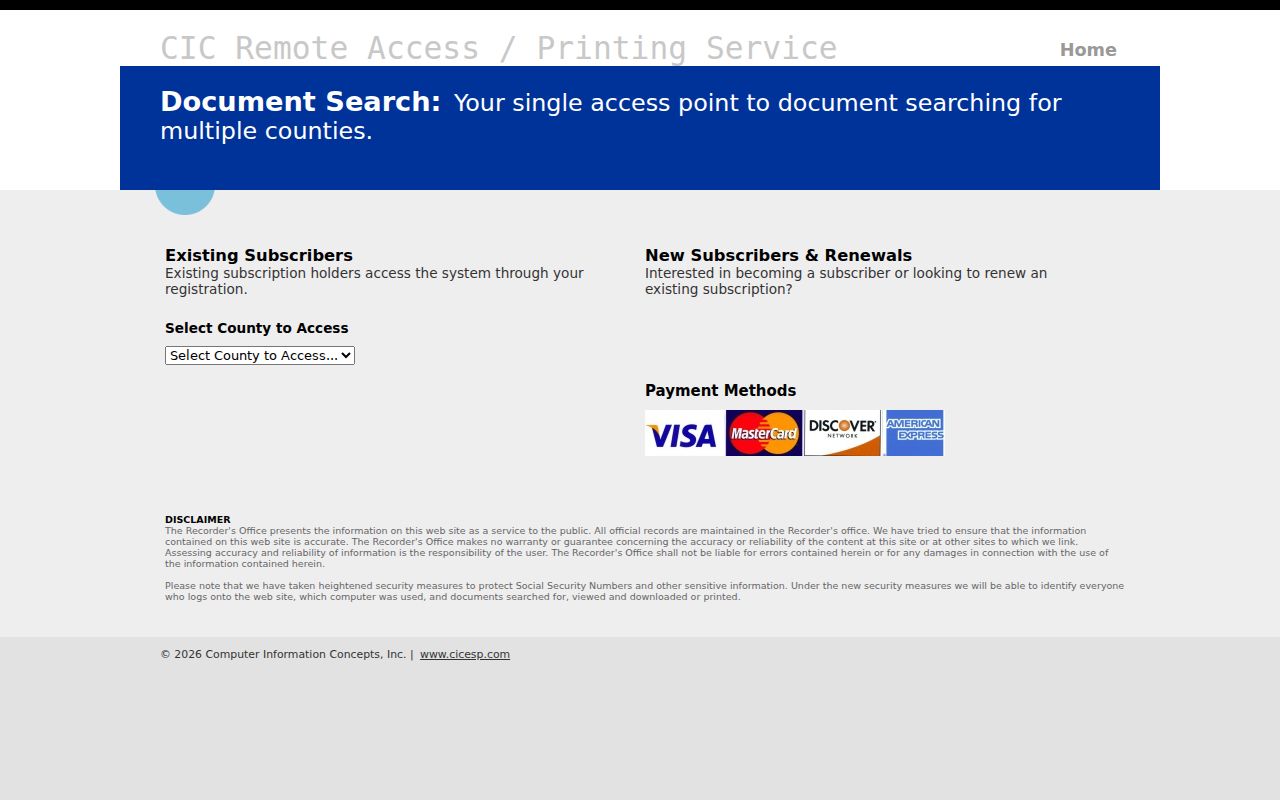
The recorded entry supplies the book and page you need. Carry each verified citation into the deed chain timeline rather than treating the search landing screen as proof of ownership in Ness County.
| Transfer date | Grantor to grantee | Deed type | Book/page |
|---|---|---|---|
| Latest recorded date | Current seller to current buyer | Read the instrument | Copy from index result |
| Prior recorded date | Earlier seller to later seller | Read the instrument | Copy from index result |
| Earlier book era | Repeat with legal description | Deed, patent, or other conveyance | Use office book |
The table guards against a classic mistake: reading a name hit as the same parcel. Match the land description at every step. A warranty deed, quitclaim deed, representative deed, or patent can each move the chain differently, so read the instrument itself rather than trusting the index label alone.
Reverse Ness County Deeds
The county's remote recorder search takes a party name, a date, a block and lot, or an unplatted Section, Township, and Range. For tracing past owners, its job is simple. You walk the same tract backward, grantee by grantee, until the chain runs out. Ness County also posts a separate subscription login. Remote access may carry a plan charge plus printed-page fees, so plan lookups accordingly.
- Find the latest purchase deed with the current owner as grantee. Confirm the Ness County legal description before using the name.
- Read the grantor from that deed. Enter that exact person or entity as a grantee in the next search.
- Open the earlier acquiring deed, compare its land description, and add the transfer to the timeline.
- Repeat until the remote trail stops. Then give the last book/page and legal description to Register of Deeds staff.
- Grantor
- The party transferring an interest in the deed.
- Grantee
- The party receiving the interest.
- Chain of title
- The ordered run of instruments affecting the same land.
- Reverse index
- An index organized to find grantors rather than grantees.
- Quitclaim and warranty deeds
- A quitclaim conveys the grantor's interest without warranty; a warranty deed carries title promises stated in the instrument.
Ness Index Dates Need Care
Ness County states that documents "present to 1988" are indexed. They are searchable by name and legal description. Read that wording closely. It fixes no exact first year for online coverage. It does not promise that every image is free or complete. The physical deed books reach back to the late 1800s. So the office holds far more history than the remote statement covers. Older parcel chains may still need a visit or a request.
Time-depth key. Treat 1988 as the county's stated remote coverage anchor, not a guaranteed first web year; take older searches to the deed books.
Scanned indexes run through 2023. For anything later, the county points searchers to the legal description. It also points them to the Find Now function. A fresh transfer can also land in the recorder's sequence. That can happen before other county systems catch up. When rebuilding a former-owner chain, trust the recorded instrument date. Trust the book and page citation over anything else.
Ness Names and Book Prefixes
Names rarely appear in just one form. The recorder's help suggests entering part of a party name. Try Last First, First Last, or a quoted phrase like "Smith John." When the legal description is solid, test a few patient variants before giving up. A same-name hit with a merely convenient date does not belong in your chain. Resist the temptation to force it.
Book prefixes matter more in Ness County than almost anywhere. Books 1 through 54 carry D for deeds. MS covers miscellaneous records, PT patents, and OG oil and gas. OGR marks oil and gas releases, and RA marks release assignments. From Book 55 onward, the book number itself serves for deeds and miscellaneous filings. Knowing these codes turns a cryptic old reference into a workable records request.
Note: A missed spelling in the index is a reason to check books and legal descriptions, not a reason to invent a missing owner.
Ness Legal Descriptions Persist
A street address often arrives late to the paper trail. Recorded land in Ness County is tied instead to a subdivision, block, and lot. Rural tracts never platted use Section, Township, and Range. The wording can shift too. A split, a merger, an addition, or a replat may each leave the older description behind. Copy the legal description exactly as written. Then lay it beside the next deed in the chain and the recorded plat it points to.
The Ness County tax search carries many subdivision names. These include South Ness City, South Bazine, Westside, Foos, Browns, Calhouns, and several replats. Treat those labels as leads rather than proof of a plat's legal effect. The dropdown even lists "Invalid Code," which is a data value and not a place. Who held the title? The recorded plat and the deed control the historical link.
Ness County's 1906 Bridge
The 1906 Geo. A. Ogle atlas bridges the gap between modern parcel records and the oldest deed books. Its township maps name landowners outright. Town plats, a patron directory, and portraits add place and family clues. The Kansas Historical Society catalogs it as Oversize K 912.781 N37 1906.
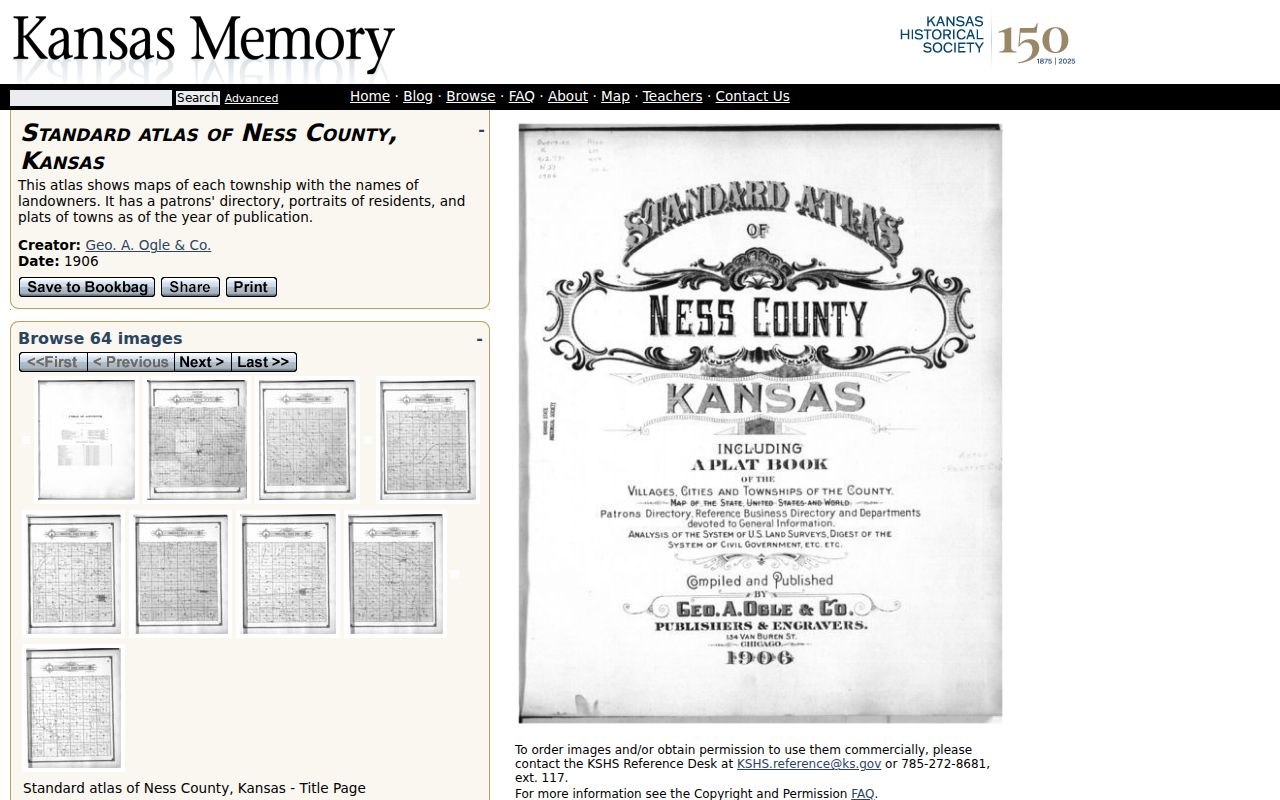
A name printed on an atlas is not a conveyance. Treat the 1906 map as a pointer. It points toward a township, a surname, or a town plat worth chasing in the deed books. The actual legal transfer still lives in a recorded deed or patent, so old owner research in Ness County tends to bounce between map context and the instrument books. That back-and-forth is normal, and the atlas explains why.
Historic Ness Place Names
Place names shift, and former owners may hide behind an alias. Ness City once carried the post-office name Iowa. Ransom answered to Odgensburgh before it took its current name. Search both versions. That can surface newspaper notices, directories, plats, and estate references. Some of these seem disconnected from the modern town name.
An alias never changes the legal description. Anchor it to the tract, the book and page, and a date. The Kansas Historical Society's county bibliography is another thread. Its newspaper microfilm and clclippings can carry an obituary or public notice into a probate file. From there the trail often leads straight back into the deed chain.
Estate Branches Among Prior Owners
Probate can fork the trail. A former owner's name vanishes for reasons the deed books only hint at. A representative's deed, a court order, or a recorded death certificate may hold the explanation. A later deed from heirs may hold it too. The Register of Deeds advises filing a certified original death certificate of an owner. Filing it as a land-record practice does not open the vital record to everyone.
Index the decedent and the representative in the deed index first. A public probate lead may be needed. The Kansas court case search is the next stop. Court results are not title proof. They may omit restricted or older material. The case order may matter to the chain. If so, request the underlying file from the District Court clerk.
Ness Research Beyond the Web
Offline research in Ness City starts at the public library. It has served the community since 1887. It offers public computers, printing, faxing, copying, and Wi-Fi. That makes it a practical workstation for searching Kansas Historical Society catalogs, newspapers, and local references when home access fails. Confirm its exact local-history holdings before making a special trip.
The fallback chain also includes mail, phone, email, and an in-person counter request. The Register of Deeds lists rod@nesscountyks.gov and office hours of 8 a.m. to 5 p.m. A focused request should name the parties and approximate dates. It should also give the legal description and the last known book/page. Office copies are listed at $1 per page. Emailed copies are listed at $1 per document, with fees subject to recheck.
Limits on Ness Former Owners
Some physical land records here date from the late 1800s, the county says, and the holdings include patents, a few signed by early presidents. Treat that as an archival clue. It does not prove any particular Ness County tract holds such a patent. Stop only when the instrument trail reaches a supported origin. If the records leave a gap, report it as a gap.
Finishing a full chain may call for a title examiner or abstractor. Register of Deeds staff can retrieve documents and explain access. Staff will not, the county says, offer an opinion on clear title. House-history work can tolerate an unresolved question. A purchase, easement dispute, or legal claim cannot, and it deserves professional review.
Lawful use. Research Ness County former owners for title work, estate questions, house history, or property diligence. Never use these records to target or harass a living person.